
I'm heading to Melbourne in January, and in my browser I've got the same boutique hotel open in two tabs: one on the hotel's own website, and one on Booking.com. This particular hotel has been on my list for a while, so I went straight to their website first, but I've got the second tab ready just in case. If Booking.com comes in cheaper, that's where I'll book.
Booking.com states its commission averages about 15% globally (ABC News), so on Melbourne's average September room rate of $242, the hotel would hand over about $36 a night if I book through the second tab.
Booking sites are at their best when they bring a hotel guests who would never have found it on their own, and that's commission well spent. On a guest like me, who had already chosen the hotel before I went looking, it's money the hotel could have kept, and the opportunity for hotels, apartments and holiday parks is to win more of those guests through their own websites while the booking sites keep introducing them to people who've never heard of them. In October we tested what guests see when they search for somewhere to stay, and the booking sites showed up at almost every turn.
Why the booking sites keep winning
In 2024, Booking.com and Expedia Group brought Australian hotels more booking revenue than any other channel, with hotels' own websites coming third (SiteMinder). The booking sites hold what search engines and AI tools read: prices, availability, photos and reviews for nearly every property in town, kept up to date. Most hotels, apartments and holiday parks publish a fraction of that about themselves, so the booking site becomes the easiest source to quote, even in answers about the property itself.
The booking sites also pay to be seen, and each booking is worth more than it was. Australians spent $29.7 billion on domestic overnight trips in the March quarter, up 3% on a year earlier, while the number of trips stayed flat (Tourism Research Australia). Event nights are worth the most: on AFL Grand Final night, Melbourne hotels ran at 93.4% occupancy at an average of $420.50 a room (CoStar).
In the US, Google's AI Mode now books hotel rooms inside the answer, and its launch partners are Booking.com, Expedia, Hotels.com, Priceline, Trip.com and five global hotel chains (Skift), although it isn't available in Australia yet.
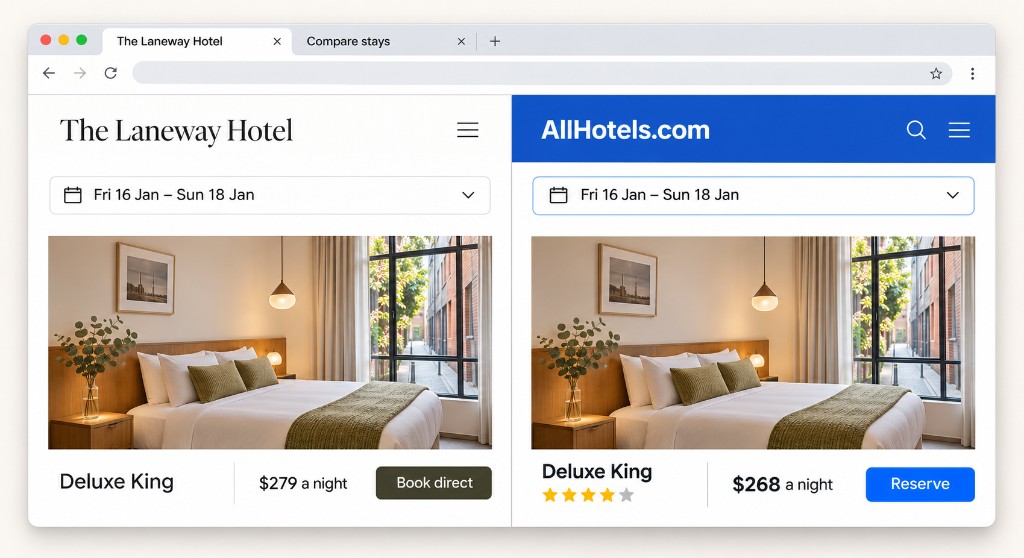
A guest who already knows your name can still book through the other tab.
What guests see when they search
We ran 18 Google searches and nine AI Mode questions from Perth and Melbourne, across hotels, serviced apartments, resorts and holiday parks. It's one day's snapshot, and AI answers change from one search to the next, but the pattern held in both cities.
| Where the guest looks | What we saw |
|---|---|
| Searching a property by name | Google's AI summary cited Booking.com for all nine properties, alongside the property's own website |
| Google's price box for a property | A third-party site showed a lower price than the property's own website in five of seven |
| Asking AI where to stay | A Booking.com ad inside the answer on six of eight questions. One property advertised there: Urban Rest, with "Book Direct For 10% Off" |
The AI answers often told guests to book direct, when the property gave them a reason. Asked whether to book Seashells Mandurah direct or through Booking.com, AI Mode said book direct, and listed the perks from Seashells' own website: a subscriber promo code, Stay 4 Pay 3 deals, and a $200 voucher for every 10 nights booked. Search for East Perth Suites Hotel and Google's AI summary opens with "Book direct through the East Perth Suites Hotel website", which matches the Book Direct page on the hotel's site.
A lower price in Google's price box undercuts any reason you give.
Write down why a guest should book with you
The commission worth winning back is on guests who already want you: the ones searching your name, and the ones coming back for another stay.
AI tools repeat what a property publishes, so winning those guests back starts with writing down why they should book with you, then making sure no one shows a cheaper rate for your rooms on Google. A lower price in Google's price box undercuts any reason you give.
Hotel chains already give guests a reason to book direct through their loyalty programs, which leaves independent hotels, apartments and holiday parks with the most to gain.
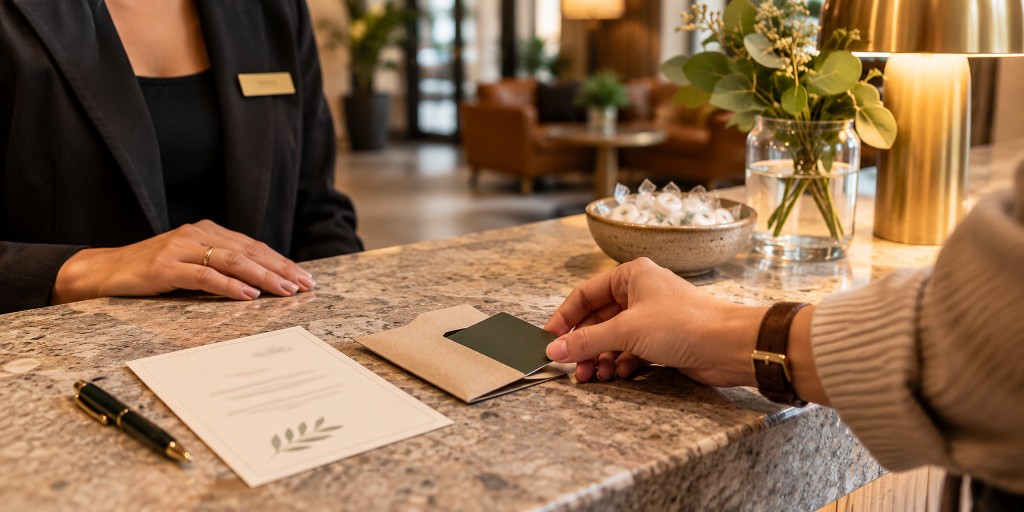
A guest who booked through a booking site this time knows your name for next time.
What to do next
- Publish a book-direct page. List what a guest gets by booking with you that a booking site can't give them: a better rate, free parking, late checkout, easier cancellation. AI tools quote specifics, so name them.
- Check your price on Google. Search your property's name and look at the price box. If a third-party site is cheaper than your own, ask your channel manager (the software that sends your rates to the booking sites) which partner is reselling your rooms.
- Ask AI about your property. Ask Google's AI Mode and ChatGPT about your property by name, and whether to book you direct or through a booking site. Note which websites they quote, then update your Google Business Profile and your own pages first.
- Give booking-site guests a reason to come back direct. A guest who booked through a booking site last time knows your name now. Use the stay itself (the welcome at check-in, the room card, the follow-up email if you have their address) to tell them what they get by booking with you next time.
A guest who searches for you by name has already done the hard part of choosing you, and the properties that give those guests a reason to book direct save their commission for the guests the booking sites actually found.