Four brand and marketing insights from our team, delivered every month.

Wetting Agent and The Holy Grail of Digital Marketing
I recently tried to diagnose my dying lawn over summer.
“Why is my lawn dying in patches?” I asked Google. I thought from such a simple, informative query I’d get links to gardening blogs or similar info-based webpages.
Instead, I was presented with Shopping Ads for fertilisers and wetting agents.
Why? I didn’t type in any keywords related to those products…
Then it dawned on me. Google Ads was leaning on its Large Language Model (LLM) so that ad campaigns could interpret the meaning behind search queries, rather than just relying on the literal keywords typed in. This new approach is called Keyword Intent and allows a top-of-funnel (TOF) query to trigger bottom-of-funnel (BOF) results, like wetting agents and fertilisers, based on the likely outcome of my curiosity and not just the exact words I typed in.
For brands and marketers, this feels like a step closer to the pinnacle of advertising: true omnipresence across the full customer journey.
I no longer need to spend hours targeting every product-related keyword variation for my campaigns and can still show up for search queries where my product or service is contextually relevant. That shortens the gap between discovery and decision drastically.
In 2026, our search queries are longer, more conversational and problem-led. And we’ve come to expect solutions immediately. For advertisers and marketers, we don’t have the luxury to wait until a user is in-market for [buffalo lawn fertilisers] and now Google has delivered the solution with Keyword Intent.
Read Search Engine Land’s explainer on how Keyword Intent works →
// Brayden Zuin, Performance Media Executive
Songs are too short these days
It’s not because the music isn’t good, I just want more.
PinkPantheress’ “Just For Me” sits at a tidy 1:56 and staccatos between the verse and chorus twice before fading out.
Blur’s “Song 2” (1:59), John + Jane Q Public’s “Watermelon” (1:49), melodies that tease with an outro promising more. So you press play again. Built for repeatability, the lack of closure leaves you looping endlessly, never quite reaching a final crescendo.
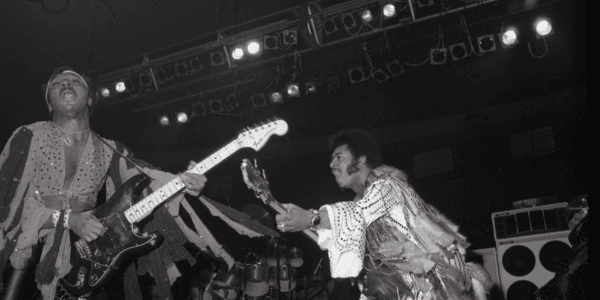
At just over five minutes, The Isley Brothers “Footsteps in the Dark, Pts 1 & 2” (5:06) lets every instrumental layer breathe. Ronald Isley’s vocals echo before the harmonies join in, a rich, textural platter of sound. The outro lingers at the door before saying goodnight.
A reflection of our time. Our attention spans are obliterated into 30-second shards with revenue models for music built on pay-per-play and social media rewarding songs for their bite-sized virality.
But does it matter if a billion people stream your song if you’re not remembered after? Brand equity doesn’t grow when you fatigue your audience with too much, too fast. Vanity metrics can cloud meaningful engagement.
Yes, the number of impressions counts, but also remember to leave a lasting one.
Listen to Sarah’s selection of 12 long songs on Spotify →
// Sarah Salameh, SEO Manager
How much should you invest in marketing?
I get asked this question a lot. And the honest answer is it’s rarely as simple as picking a fixed percentage.
Every business has different margins, operating models, and growth goals. A retailer, a service-based business, and a B2B provider can’t all follow the same rule of thumb and expect the same outcome.
More importantly, there’s a difference between investing in marketing and investing the *right amount* into marketing. The right amount is the level of investment that gives your business the best chance of achieving its goals, whether that’s growth, market share, margin improvement, or long-term stability.
So, to decide what “right” looks like, you need to consider both first-time customer value and lifetime value.
Take dental clinics or veterinarians as examples. A first appointment might be worth $300, but the cost to acquire that customer could be $200, or 60% of revenue. On face value, that seems expensive, until you realise those customers often return for five to ten years. So while their first-time customer value is quite low, their lifetime value can be worth thousands.
To try this scenario out for your own business, use the following equation:
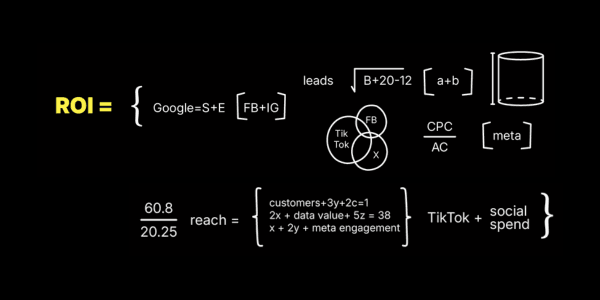
CACmax = (T × AOV) − CWhere:
- CACmax = maximum you can afford to spend to acquire one average customer
- T = average number of transactions per customer
- AOV = average value of each transaction
- C = total cost of goods/services sold across those transactions
// Alex Gavalas, General Manager – Strategy

The London Rat Race
Growing up in the UK and starting a career in London felt like stepping into a competitive sport. The ‘London Rat Race’ was real. Long hours, packed Northern Line commutes (often wedged into someone’s armpit before 8am), high living costs and constant pressure to succeed.
Most days were fuelled by Pret baguettes, adrenaline and the occasional stress tears, juggling what felt like countless accounts. “Work hard, play hard” usually meant extra hours and late nights at the pub just to take the edge off before doing it all again the next day running on empty.
Fast forward to working in Perth, where I’ve found something refreshingly different: balance.
Working at Bonfire feels calm in the best possible way. There’s a steady, supportive rhythm to the days, with safety nets in place. People back each other, challenges are shared, and there’s space to think clearly rather than react in chaos. Even the (almost) stereotypical Friday drinks doesn’t feel like a desperate attempt to take the edge off, but something genuinely enjoyable!
I’m still busy and challenged as part of the Account Team, but I also see daylight, actual daylight! With space to think and be creative, work becomes something you grow in, not just something to power through.
And it turns out that being well-rested does make you better at your job.
// Abbie Toynton, Senior Account Executive
Bonfire is an award-winning performance marketing agency based in Subiaco, Western Australia.