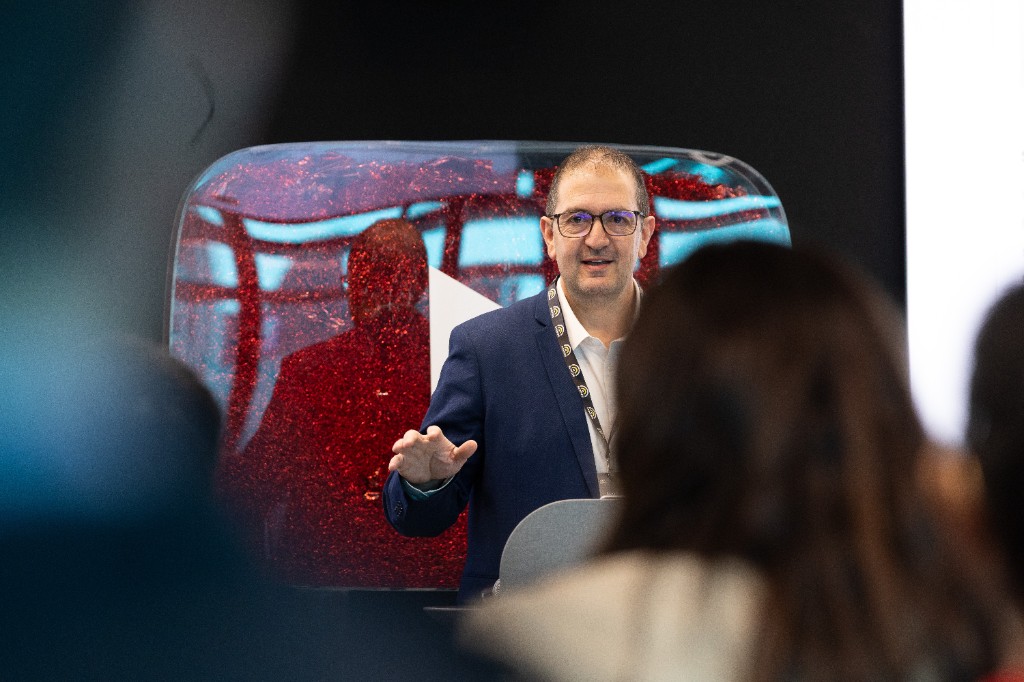
Around 100 business leaders and senior marketers joined us at Google’s Melbourne office for Multiplier, and they brought plenty of questions with them. (You can read our recap of Multiplier Melbourne for the full story of the morning.)
Arun Muthu, Head of Agency & Ecosystems ANZ at Google, took the room through where Search and AI are heading, and our Performance Strategy Lead, Brodie McMaster, followed with the 7 Deadly Sins of Advertising. When our Senior Strategist, Evan Dela-Grammaticas, opened the floor, the questions ranged from AI Max to what AI still can’t do.
In this post, Evan and Brodie answer seven of your questions we didn’t get to on the day:
- Which of the 7 Deadly Sins should teams fix first?
- Do people use AI differently for high- and low-intent purchases?
- How do you run AI Max without it pulling in irrelevant search terms?
- Should you build a custom landing page for every search term?
- With AI running ad setup, where do the insights come from?
- Can we trust AI to represent our brand, and what happens to that trust as ads move into AI answers?
- Where’s the opportunity AI can’t fill in the next five years?
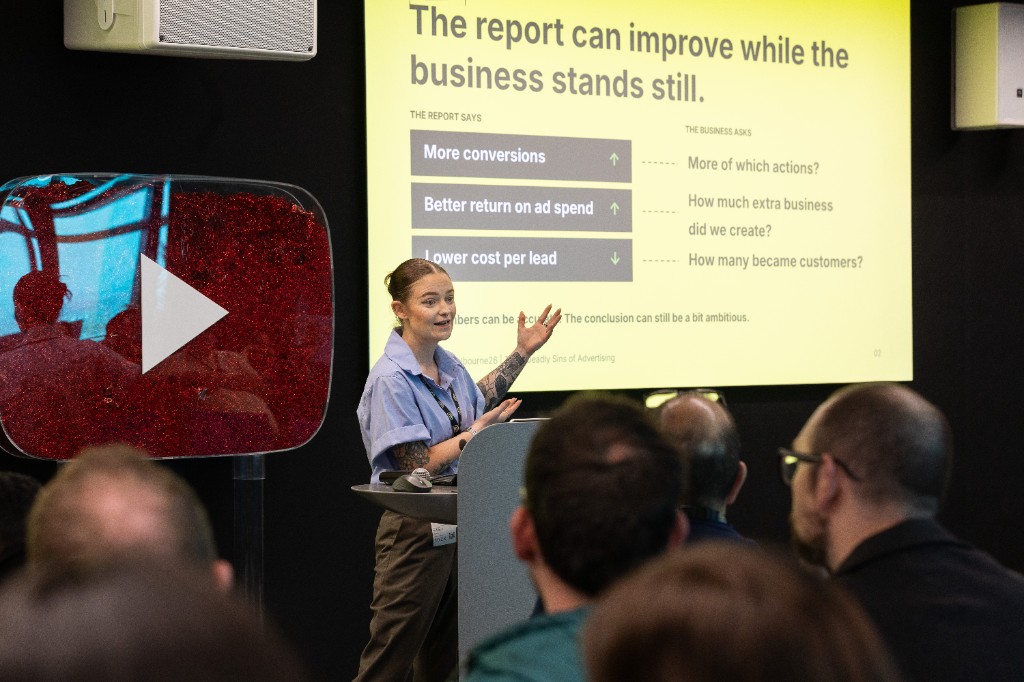
Brodie McMaster on stage for the 7 Deadly Sins of Advertising.
Which of the 7 Deadly Sins should teams fix first?
Brodie: I’d look at this as short term versus long term.
Short term, I’d probably start with Pride (worshipping your own brand language), because it can be checked and acted on quite quickly, and the benefits can carry through the rest of your advertising.
When someone reaches your site, they need to feel confident that you offer the answer, product or service they’re looking for. If they search “home builders for narrow lots” and reach a page about “integrated living solutions”, they’re still trying to work out whether you can build a house that fits their block.
That could be an ideal customer for you. They just don’t feel like it.
Long term, I’d focus on Greed (chasing the cheapest lead), mostly because you don’t necessarily feel the implications immediately.
Chasing cheaper leads might look like a great quarter for marketing. But six, nine or 12 months down the line, you might realise those enquiries rarely became customers. Or the customers you did win bought low-margin products, needed a lot of sales effort and never came back.
Do people use AI differently for high- and low-intent purchases?
Evan: Partly yes, but I’d frame it a little differently.
The data splits by task more than by purchase type. People use ChatGPT and Gemini for the open-ended “what should I get?” work, which means shortlisting and comparing. They use Google to check prices, find the site and verify what the chatbot said. That pattern is stronger for considered purchases because those involve more research.
AI Overviews work differently. People don’t choose them. Google serves them, and they rarely show on buying searches: just 5% of transactional queries, a split we covered in why organic traffic can fall while leads hold steady. They mostly appear mid-research.
Think of ChatGPT as the friend you ask for advice, and Google as the shop you visit to check the price.
How do you run AI Max without it pulling in irrelevant search terms?
Brodie: I’d see AI Max as an opportunity for discovery. People are now searching conversationally, using more unique and longer-tailed queries. Those are much harder to capture (and predict) from a typical exact-match or phrase-match keyword set.
But I’d also set the expectation that some of those searches won’t be relevant. We’re giving the system more room to explore, so we need to agree what we’re comfortable spending on that exploration and how we’ll judge it.
Start small, then expand. Use an experiment where appropriate, which gives you more control over how much of your budget goes towards your chosen keywords versus AI Max. Otherwise, you might find a campaign intended to capture people ready to buy has spent a significant amount of its budget on consideration-stage searchers who are higher up the funnel and don’t appear as strong.
Then put consistent search-term reviews in your calendar. AI Max can have a habit of running a little wild, so you need someone there to wrangle it. Remove clearly irrelevant intent, but don’t negate something simply because it’s unfamiliar or hasn’t converted after a few clicks. Ask whether it could represent a useful customer.
Should you build a custom landing page for every search term?
Brodie: Not every search term, or your poor developer might have a heart attack.
I’d start by looking at what’s spending money but isn’t converting. At least there, you know people are searching for it, and you know they’re clicking your ad. So where’s the drop-off?
Look at the search, the ad and the page together. Is the page answering what they asked? Is important information missing?
Then group the searches into themes, rather than treating every variation as a separate page.
“Home builders for narrow lots” and “narrow block home designs” could probably share a useful page. “Knockdown rebuild costs” needs a different conversation. Similarly, “part-time MBA” and “MBA while working full time” are likely to share questions about scheduling and workload.
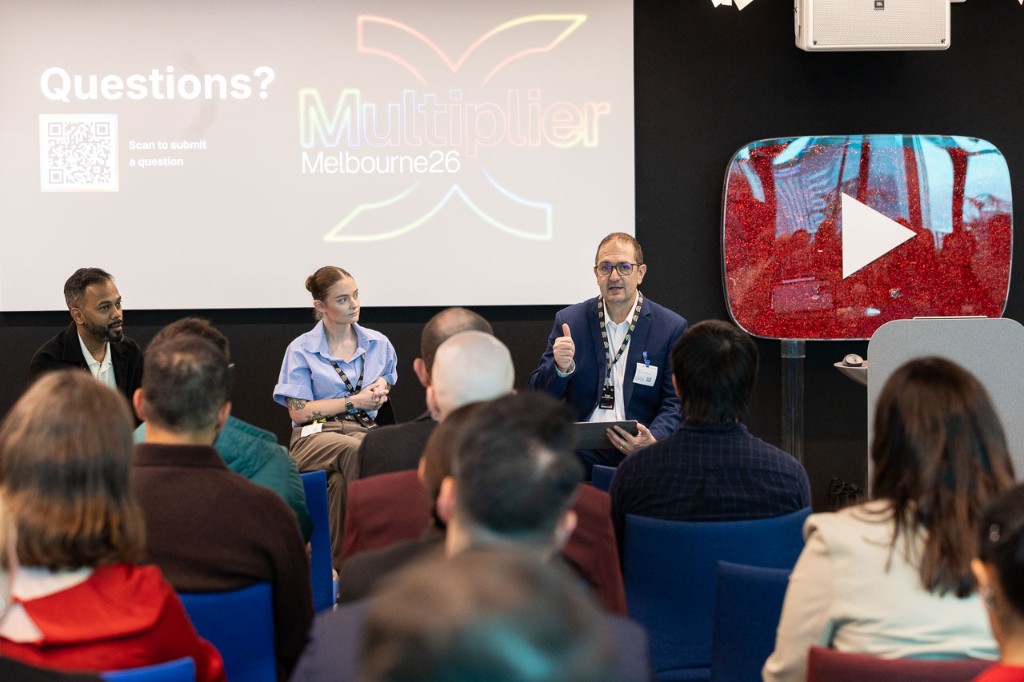
Evan Dela-Grammaticas hosting the Q&A with Arun Muthu (Google) and Brodie McMaster.
With AI running ad setup, where do the insights come from?
Brodie: A lot of them come from zooming out of the platform and asking better questions.
What’s happening to revenue? Who’s buying? Has the traffic mix changed? Is demand seasonal? Has something shifted in the industry, or has the sales team noticed a different kind of enquiry?
AI can help analyse that information. It won’t necessarily have it unless someone brings it into the conversation.
I’d also encourage teams to get comfortable testing AI now. The platforms are moving further in that direction, with advertising expanding into AI Overviews and AI Mode, and there’s value in learning how to guide AI while you have room to experiment, rather than waiting until a platform update forces your hand.
That doesn’t mean accepting every recommendation. It means understanding what you’ve allowed the system to do, what you expect from it, and how you’ll decide whether it helped.
Can we trust AI to represent our brand, and what happens to that trust as ads move into AI answers?
Evan: When it’s paid media, AI isn’t representing your brand. You’re buying the ad.
When it’s organic, trust is higher, the same as it is with SEO. With paid, the brand hasn’t yet earned the organic position, so it pays for the exposure. Users know this, and they disregard paid exposure to some degree.
Does that mean AI ads won’t work? Definitely not. They will.
Paid and organic have always performed differently on Google. That’s never made Google Ads less effective. Google Ads is one of the most valuable tools a marketer has.
AI ads will follow the same path. Consumers will judge them on whether they’re useful and relevant in the moment. If they are, they’ll become another channel for reaching the right audience. If they feel like a paid opinion dressed up as advice, they won’t.
The technology is new, but the principle isn’t. It’s placement relevance, and it’s the same fundamental we’ve always worked to.
Where’s the opportunity AI can’t fill in the next five years?
Evan: Estimating what will happen in five years is impossible right now, with changes that shift the entire industry happening almost weekly.
In the spirit of the question, though, I think we need to double down on what makes us unique. For now, AI is very effective at managing processes. But people aren’t processes, and they don’t want to feel “managed”. They want to feel acknowledged.
That’s a unique opportunity. We should maximise our use of AI to improve our efficiency, and use the time we save to deepen our relationships with our customers.
I wouldn’t recommend inserting AI into a relationship that needs human connection. It’s likely to significantly dilute your relationship with your clients and, worse, commoditise you. It’s also likely to be the quickest “win” most businesses grab with both hands, because efficiency is an easy number to quantify and sounds good on a board report.
Beyond that, business has changed. We no longer have the luxury of investing months into developing an idea, product or concept. We need to fail fast, or risk launching a product that’s already out of date before it reaches the market.
People aren’t processes, and they don’t want to feel ‘managed’. They want to feel acknowledged.
Brodie: Think about an automated birthday email versus a handwritten card from someone who knows you.
The email might have lovely design and beautifully written copy. But the card mentions something personal, a shared experience or a joke only you’d understand. It gives you that little “they get me” feeling.
AI could help write either one. What matters is what that person noticed, remembered and chose to say.
That’s where I see a lot of opportunity. Understanding why a customer is hesitant. Recognising that a client’s short reply might mean they’re having a rough week, rather than that they hate the strategy. Knowing when taking someone for coffee will achieve more than another carefully worded email.
And there’s something in uniqueness, too.
AI does a great job of working with what’s already out there: what you’ve supplied, what other brands have done, the patterns it’s learnt. It can make unexpected connections and help develop new ideas. But getting something polished back doesn’t necessarily mean you’ve found something distinctive.
I wouldn’t confidently predict everything AI will or won’t do in five years. But I’d keep investing in understanding people, developing an opinion and recognising an idea worth pursuing.
Hopefully we’ll still have a few award-winning ideas that didn’t begin with “make it like this, but for our brand”.
We’d love to see you at our next event. Our events page has what’s coming up.